









John Hall and Whisky: A Good Meritage
Posted on February 4, 2011

Jon Hall at the Bistro la Persaud
Last month, Wednesday, January 19 to be exact, I was invited to attend a private luncheon at Bistro la Persaud, in Edmonton with John Hall, the founder of Forty Creek Whisky. It was a small gathering with only a few of us ‘media’ folk invited. The purpose of the luncheon was to allow the invitees to have an informal question and answer with Mr. Hall taking advantage of his attendance at the 2nd Annual Edmonton Whisky Festival and the launch of his new whisky Forty Creek Confederation Oak.
I kind of sat back and let the others (who are more experienced at this sort of thing) do the questioning and interjected only a few queries here and there. It seemed better just to listen than to speak.
For those who do not know, John Hall is the new guy on the block with respect to Canadian Whisky. He has been making whisky in Canada since 1992, but in a country where only three new distilleries have been successfully launched in the last 100 years, this makes John Hall the new guy. The nice thing about new guys, is that they often have new ideas, and right from the very beginning, John had some very new and very interesting ideas on how to make his whisky.
According to Mr. Hall, it all started in 1992 when he opened Kittling Ridge Winery & Distillery. He had noticed in the late 80’s that the Scotch Distillers were beginning to develop fine single malt Scotch Whiskies, and the Bourbon Distillers in Kentucky were beginning to develop small batch Bourbons. But Canadian Whisky (in his opinion) was becoming a boring category. Mr. Hall wanted to add some excitement to the category by making a hand crafted Canadian Whisky.
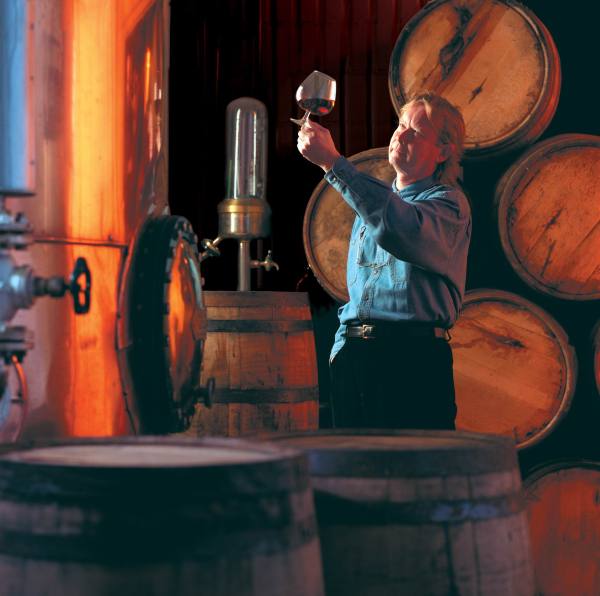 This whisky, named Forty Creek, would be like none other on the landscape of Canadian Whisky. For starters, it is made in two small copper pot stills. In Canada, the idea of making whisky in small copper pot stills had been abandoned decades, if not centuries earlier. It just wasn’t economical. But because John’s whisky would be all about flavor and smoothness, copper pot stills seamed to him to be the natural way to go.
Borrowing a little from conventional wisdom, John chose three grains as the base of his Canadian Whisky. He distilled a corn whisky and aged it in heavily charred white oak barrels; he distilled a rye grain whisky and chose to age it in a lightly charred white oak; and he distilled a barley grain whisky to age in medium charred white oak. Each grain and each barrel had a specific function. I should point out here that John made a very interesting decision with respect to the distillation of each grain. Mr. Hall chose to distill each grain only once for his Forty Creek Whisky. A single distillation whisky is practically unheard of. But John knew that if he captured the heart of the distillation, then by distilling only once, he could also capture the best flavours of the distillation which would have been lost by a second distillation.
 John had begun to draw upon his experience as a Wine Maker and chose to view each whisky distilled from each grain as a separate ingredient to be perfected before being blended. Each whisky was to provide an essential component of the whole and had to be made in a specific way. The corn provides the rich body and weight for the whisky; it is aged in heavily charred barrels to draw out the sweetness of the oak and the rich vanillans. The rye provides the spice and fruity flavours and is aged in the lightly charred barrels to allow the spicy rye flavour to gain depth. The barley provides an element of nuttiness and is aged in a medium char to further that aim. Each whisky is aged for a different time period, from as little as six years to as long as 8 to 10 years. It is not a specific age that John looks for when he taste tests his barrels, it is a special taste.
After aging each whisky Mr. Hall made the final decision which sets his whisky firmly apart from the other whiskies in Canada. He blended his unique Forty Creek whisky from each of the finished grain whiskies he had created, and then set the blend down to age yet again in his own Sherry Casks. Being a wine maker first, John had access to his own sherry barrels, and he used these to ‘marry’ his blend together in the Sherry Casks for six months before he bottled the final whisky, and called it Forty Creek Barrel Select.
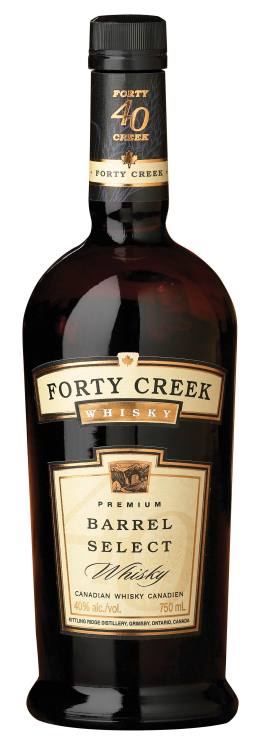 In essence Mr. Hall created what he calls his ‘Meritage‘. His own unique blend of whisky built upon a foundation of three grains each distilled in small copper pot stills, aged in its own barrels, then all three blended together and married in John’s own Sherry Casks.
Although it must not have seemed like it to John Hall, the success of this whisky was almost immediate. It seemed that whenever the whisky was tasted, it was appreciated. It spread out from Ontario westward to the Pacific Ocean, eastward into the Canadian Maritimes on the Atlantic Ocean, and south into the US all the way to the Gulf of Mexico. Not only is the whisky selling wherever it goes, it is winning awards wherever it goes… Not bad for the new guy!
In case you are interested, I have reviewed a few of the Whiskies from Forty Creek and have provided links to these reviews below:
 The Rum Howler Blog
Mike said
Some great info here, though I think Mr. Hall makes a little too much of his blending process, which is essentially a standard practice in Canada. It sounds like he uses three whiskies in his blend; Crown Royal supposedly used more than fifty. I think he should focus more on his unique distilling practices instead of trying to make his three-grain blending sound like something unheard of in this country.
Also I think that Barrel Select would be much better if it was bottled at a minimum of 10 or 12 years. I had some last night and it is pretty tasty, but also a little rough around the edges. I wonder if he will introduce a guaranteed-age whisky at some point.
Arctic Wolf said
There are a couple of unique aspects to John’s three grain blend. Most other distillers will mix the grains in the mash and distill them together. Mr. Hall distills (and ages) each separately so that he can control the flavour each provides more carefully. He also ‘marries’ the three grain whiskies in oak prior to bottlling whereas most other Canadian Distillers blend the finished product without this additional marrying process.
Mike said
It was my understanding that mashing and distilling various grains as a single spirit is more of an American thing, while in Canada grains are distilled and aged separately before being blended and bottled (with the exception of Canadian Club, which is blended before aging). For instance a distillery might use high-proof corn or wheat whisky and lower-proof rye and barley in a blend. Presumably these spirits have been distilled and aged separately before being selected and blended for their unique characteristics, much like Forty Creek. Or is there some part of this process I am misunderstanding?
Arctic Wolf said
I’m going to check on that Mike, but I think the approach varies a bit from what you are suggesting. I was at Alberta distillers recently, and they definitely indicated that they have more than one grain in the mask bill for most of the whiskies they produce (with the exception of Alberta premium). I believe Crown Royal, and Black Velvet do the same.
But like I said, I will check into this.