






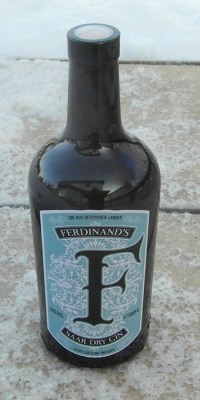
 Ferdinand’s Saar Dry Gin is produced at the Avadis Distillery in Wincheringen in the tri-border region of Germany, near the border of Luxembourg and France. This is wine growing country, especially famous for the semi-sweet Riesling dinner wines which, when I was a youngster, seemed to be present at every wedding I attended and almost all major occasions. It is not surprising then, that Master Distiller, Andreas Vallendar has chosen to infuse his dry gin with Slate Reisling Wine.
The gin draws its name from Royal Prussian District Forester, Ferdinand Geltz who was the historical co-founder of the VDP Mosel-Saar-Ruwer growers’ group. Within its recipe are 30 botanicals, all of which have apparently been hand-picked either by the distillery staff or by the producer from which the botanicals have been acquired. (Directly behind the distillery are quince trees; lavender grows in the fallow vineyards; and lemon-scented thyme is grown in the Distillery’s own garden.) And, as mentioned earlier, topping everything off is the wine infusion which uses hand selected harvest wines from the large Saarburger Rausch vineyard site.
Here is a link to my full review:
Review: Ferdinand’s Saar Dry Gin
Please enjoy this review which is the first of about a dozen new gin reviews which will be published over the next few months as I embark on an early season Gin Binge.
 Gin appears to be on the upswing, at least that is the impression I receive when I walk into the local liquor stores. I see dozens of new brands alongside the traditional favourites. One reason for all of these new brands of Gin is closely associated with the upswing another spirit entirely, and that spirit is whisky. Whisky has been increasing in popularity for many years now, and to meet the rising demand for whisky, new distilling capacity is being introduced in the form of new distilleries and micro-distilleries throughout North America (and elsewhere). Whisky (in most countries) must be aged for two to three years before it can be sold which means that start-up distilleries in need of cashflow produce and sell their own brands of gin and vodka (which do not need to age) so that they have at least something to generate income while the whisky ages in the oak barrels.
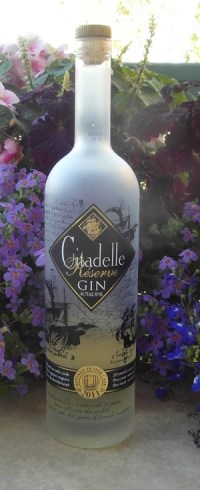 About 200 years later in 1989, Alexandre Gabriel of Cognac Ferrand, recognized that in France, gin had become more of an industrial spirit with much of the heritage and refinement lessened by time. He decided to create a handcrafted gin using small copper pots in the style and tradition of the Citadelle Distillery of old. Fortunately records existed of the old gin making techniques at the Citadelle Distillery, and after several years of research Alexandre Gabriel was successful in distilling an old style handcrafted gin under the Citadelle name. The Gin is produced at the Cognac Ferrand facilities in Cognac, France, and according to the Citadelle Gin website, it is produced under naked flame in small copper pot stills using a complex array of 19 botanicals.
 Interestingly, in addition to the core botanicals, the gin also uses 22 unique Islay botanicals which have been gathered by hand from the hills and valleys which surround the distillery. These Island botanicals are placed in loosely woven muslin sacks and then into a casket within the lyne arm of the Lomond still where the vapours of the distillation will run through them near the end of the distillation process bringing a unique Islay character to the Botanist Gin.
 The Rum Howler Blog