







 Late Bottled Vintage (LBV) Port wine is (as the name implies) a style of Port which is bottled later than the more prestigious Vintage Port. LBV Port wine remains in neutral wood between four to six years, rather than the 2 years which would be typical for a Vintage Port. Since Port wine matures more quickly in oak vats than it would in the bottle, it is ready to be served when it is bottled. However, Fonseca Late Bottled Vintage Port, (unlike many other LBV Ports) is not filtered before it is bottled, as a result the Fonseca will continue to age and should continue to improve if stored properly.
The wines used to produce Fonseca LBV were drawn from a reserve of some of the best full-bodied red ports produced during the 2008 harvest. These grapes were grown both on Fonseca’s own vineyards as well as on other properties in the Cima Corgo and Douro Superior areas of the Douro Valley. The wines are aged in wood vats of 50 pipes (27,500 litres) capacity and then bottled after five years.
Here is a link to my full review:
Review: Fonseca Late Bottled Vintage Port 2008, Bottled 2013
I like Port Wine, and in particular, I like LBV Port Wine with its bevy of fresh fruity flavours. Unfortunately, in my particular local we have a rather limited selection of LBV Port and so my reviews of this style of wine are rather scant. However, I can say without a doubt that the Fonsecu Late Bottle Vintage 2008 is a spectacular example of how great LBV Port can be.
Please enjoy the review!
Chimo!
 When the wine industry in Chile was just beginning to get its feet underneath itself in 1883, Don Melchor, a local businesman and politico imported vines from the Bordeaux region of France and began to plant them in the Maipo Valley of Pirque in Chile. These first grapevines from France served as the foundation for what was to become
 Noble One Botrylis Semillon which is the subject of this review was created in 1982 by Darren De Bortoli. Currently the wine has 26 vintages, and has become the standard-bearer for the De Bortoli family. The Noble One is produced from a late hand-picked harvest of the Semillon grape. The agent at work is a specific fungus called “Botrytis cinerea“ which affects the grapes by absorbing their moisture making them dry. As the fruit loses moisture, its sugar content increases dramatically. Other factors may be at work as well with the final result being that the “botrytised” or rotten grapes are able to produce an intensely sweet and flavourful wine. Fortunately for De Bortoli, autumn in the Riverina region (where the Semillon grapes are grown) often sees long, dry, warm days interspersed with a sprinkling of showers and heavy morning dews, an ideal situation for producing the Noble Fungus.
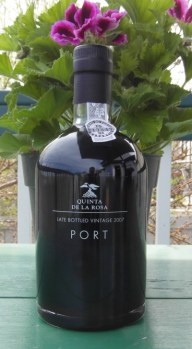 Quinta de la Rosa
 The Rum Howler Blog