








 The Fladgate Partnership owns three important Port houses, Taylor’s Port (Taylor Fladgate), Fonseca, and Croft’s. Of the three, Taylor’s is the oldest and most influential, founded in 1692 in Vila Nova de Gaia, Portugal by Job Bearsley. Although ownership of the company has moved through a variety of families, Taylor’s is (and has been since inception) independently owned and managed.
The wines used in the Taylor Fladgate Late Bottled Vintage 2010 Port blend are drawn from a reserve of full-bodied red ports which were produced from the 2010 harvest, from grapes grown on Taylor’s own vineyards and on other top properties in the Cima Corgo and Douro Superior areas. This wine remained in wood about five years and was bottled in 2015.
Here is a link to my full review:
Review: Taylor Fladgate Late Bottled Vintage Port (2010)
Please enjoy my first wine review of 2018.
Chimo!
 Late Bottled Vintage (LBV) Port wine is (as the name implies) a style of Port which is bottled later than the more prestigious Vintage Port. LBV Port wine remains in neutral wood between four to six years, rather than 2 years which would be typical for a Vintage Port. Since Port wine matures more quickly in oak vats than it would in the bottle, it is ready to be served when it is bottled.
 Late Bottled Vintage (LBV) Port wine is (as the name implies) a style of Port which is bottled later than the more prestigious Vintage Port. LBV Port wine remains in neutral wood between four to six years, rather than the 2 years which would be typical for a Vintage Port. Since Port wine matures more quickly in oak vats than it would in the bottle, it is ready to be served when it is bottled. However, Fonseca Late Bottled Vintage Port, (unlike many other LBV Ports) is not filtered before it is bottled, as a result the Fonseca will continue to age and should continue to improve if stored properly.
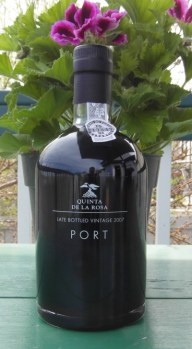 Quinta de la Rosa
 Porto Cálem
 The Rum Howler Blog