







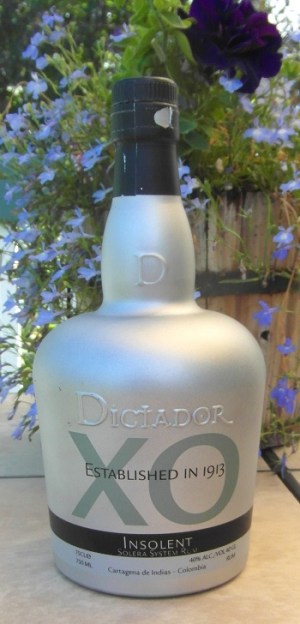
Dictador Insolent
Dictador Rum is produced in Colombia on the Caribbean coast at Cartagena de Indias City. Rather than being produced from molasses, the rum is produced from the virgin honey of sugar cane which has been distilled upon a stainless steel alembic, and aged using Dicatador’s unique take on the solera-style aging system.
For Dictador XO Insolent Rum the aging barrels used in the Solera are pre-used oak barrels which have a significant percentage of oak obtained from Jerez Spain, as well as pre-used Port Wine Barrels. Near the end of the aging process, the barrels earmarked for the XO Insolent Rum are emptied (and the rum stored of course), and these barrels are subjected to an open flame process which caramelizes the rum soaked oak fibres on the interior of the barrel. These barrels are then refilled with the same rum allowing the spirit to draw the sweet caramelized flavours from the interior of the oak barrel. The final rum is blended and barreled at 40 % Alcohol by volume.
Here is a link to the review for the Rum Howler #5 Rum of 2017:
Review: Dictador XO Insolent
______________________________________
 We have reached the top 5 rum spirits of 2017. In mid November, I tasted each of the top 5 rums side by side to determine the final rankings. These final rankings may not absolutely agree with my previous scores when reviewing each spirit, but they do reflect my feelings regarding the relative merit of each rum in mid-November 2017.
You can continue to follow the countdown on twitter (Rum Howler on Twitter) using the hashtag #Top100Rums.
Alternatively you can view the list as it grows daily by viewing my Reveal Page:
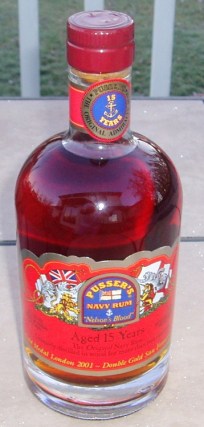 Pusser’s Rum
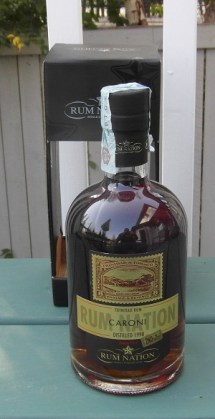 The Caroni Distillery in Trinidad and Tobago was established in 1918, and was operated at near full capacity until 1993. Unfortunately, due to industry consolidation, rum production at the facility began to decline late in the 20th century and the distillery was closed in 2002. As a matter of interest, the consolidation of the rum industry during the last two centuries is amply illustrated in Trinidad and Tobago where there this small country featured 50 distilleries at the turn of the 19th century. One hundred and fifty years later (in 1950) only 8 had survived, and today there is but one, Angostura. It seems a pity that so much tradition and history has vanished. Although I guess we can count ourselves lucky that some of the rum barrels from the Caroni distillery are still finding their way into the market place.
 Demerara County (in Guyana) is popular across the world for its rich, three hundred year history of rum production. Using a combination of old wooden stills in conjunction with modern stills and distilling techniques, Demerara Distillers Ltd. (DDL) has built a reputation for outstanding quality and consistent production. In fact, Demerara Distillers is the currently the largest supplier of bulk Caribbean rums to Europe and North America.
 The Appleton Estate is located in Nassau Valley in St. Elizabeth which is part of Jamaica’s Cockpit Country. The Cockpit Country is a karst formation which was formed over millions of years as the underlying limestone was eroded by the chemical action of rain. Within a cockpit karst formation are valleys known as Poljes. They are formed where a river floods, then recedes and forms a flat valley over millions of years. The soil in the poljes is very fertile and rich in nutrients because of the sediments left behind after the river had receded.
 The Rum Howler Blog