







 In 1862, Facundo Bacardi and his brother José bought the Santiago de Cuba Distillery and began to distill what would become the most popular commercial rum in the world. Using a method of charcoal filtering, and oak barrel aging along with a still of copper and cast iron, Facundo Bacardi created a smoother more refined version of the locally made rum. His smoother version of the spirit became local favourite, and over time, an international sensation. Of course, Bacardi Rum is not made in Cuba anymore, the Ron Bacardi Company left Cuba in the wake of Fidel Castro’s plans to nationalize all private property and privately held bank accounts on the Island. The Bacardi family moved important trademarks out of Cuba, and using a Bacardi owned plant built in Puerto Rico, were able to continue to build their company. Bacardi is now the largest family owned spirits company in the world.
The Bacardi Gold Rum is produced using column still distillation and oak barrel aging (for one to two years). The final rum is further ‘shaped’ by filtering the aged rum through a secret blend of charcoal. This charcoal filtration will help to blunt some of the harsh flavour characteristics of a young rum.
Here is a link to my full review:
Review: Bacardi Gold Rum
Please enjoy my review which includes my cocktail suggestion, the Dog Star Daiquiri.
Chimo!
 abeth which is part of Jamaica’s Cockpit Country. The Cockpit Country is a karst formation which was formed over millions of years. Karst is a generic name given to limestone that has been eroded by the chemical action of rain. There are three cockpit karst formations in the world: Montenegro (formerly Yugoslavia), China and Jamaica.
 Marauda Steelpan Rum is produced by TerraPure Spirits located in North Charleston (South Carolina).
 Rum Nation
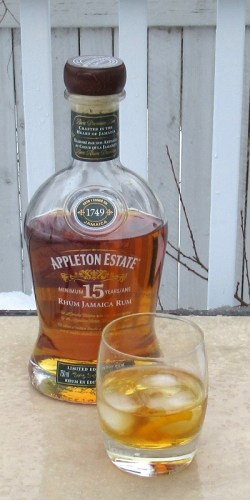 The Appleton Estate is located in Nassau Valley in St. Elizabeth which is part of Jamaica’s Cockpit Country. The Cockpit Country is a karst formation which was formed over millions of years as the underlying limestone was eroded by the chemical action of rain. Within a cockpit karst formation are valleys known as Poljes. They are formed where a river floods, then recedes and forms a flat valley over millions of years. The soil in the poljes is very fertile and rich in nutrients because of the sediments left behind after the river had receded. In 1749, within the polje known as the Nassau Valley, the Appleton Estate Sugar Factory was founded. The Nassau Valley has a special mild micro-climate which is ideally suited to the growth of sugarcane. As well, a water source wells from the limestone formation and provides an exceptionally soft pure water which used for the production of Appleton Estate Rums.
 The Rum Howler Blog