







 Madeira (an autonomous region of Portugal) is an archipelago comprising 4 islands approximately 520 kilometers off the northwest coast of Africa. Early in the colonization of these Islands it was noticed that these islands in the middle of the Atlantic had exceptional conditions for the planting of sugarcane. According to historical reports, the king, Infante D. Henrique, introduced sugar cane on Madeira Island in 1425 only 6 years after the Island was discovered.
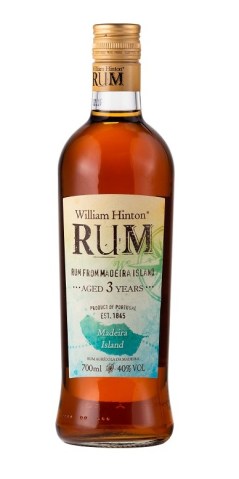
William Hinton founded his Distillery in 1845 producing the rum from local sugar cane juice. The distillery had great success and by 1920 was processing 600 tons of sugar cane daily. Unfortunately, this was the peak of the rum production and a decline eventually saw the distillery cease production in 1986.
In 2006, William Hinton’s heirs relaunched the distillery using an alembic still. Their William Hinton 3 Year Old Rum is produced from sugar cane syrup which has undergone a special prolonged fermentation process and aged in French oak barrels. The spirit is bottled at 40 % alcohol by volume.
Here is a link to my review with complete tasting notes and my serving suggestion:
Review: William Hinton 3 Year Old Rum
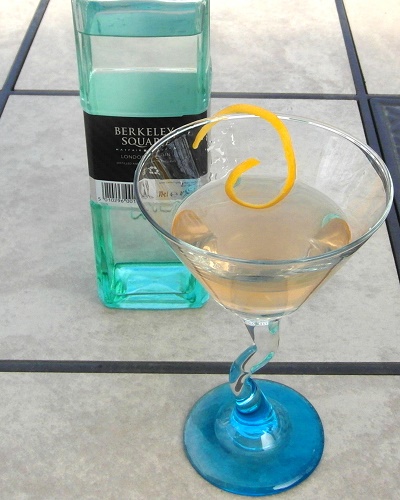
Please enjoy the review and my suggested serving, the Madeiran Presbyterian.
Chimo!
“…
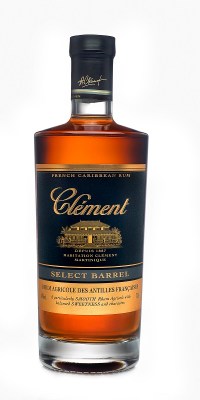 On day 16 of my Rum Advent I am travelling to Martinique to sample an Agricole Rhum from one of the most prominent Agricole producers in the Caribbean. Clément Agricole Rhum has been produced on the Isle of Martinique since 1887. Although the agricole Rhum is distilled at the Simon Distillery, the rhum is finished at Habitation Clément (built on the site of a former sugar refinery) which was purchased by Homére Clément in 1887.
 Distillerie Reimonenq (also referred to as Musee Du Rhum) was founded in 1916 by the Reimonenq family. The distillery, like most others on Guadeloupe, produces Rhum Agricole from distilled sugar cane juice. The fresh-cut cane is crushed by electric mills and the resulting ‘honey’ undergoes a 24 to 48 hour fermentation in open air vessels. The fermented ‘wine’ is distilled in a stainless steel column in the traditional french manner.
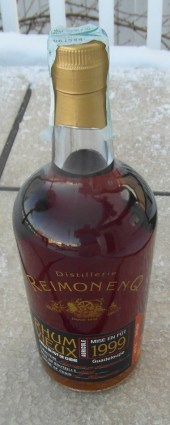 Unfortunately for the rest of the world, this particular bottling seems to be only available in Italy (and in other small pockets of Europe), however the following review hopefully will provide some insight into the taste profile of the Guadeloupe Rhum produced at the Reimonenq Distillery.
 Distillerie Reimonenq (also referred to as Musee Du Rhum) was founded in 1916 by the Reimonenq family. The distillery, like most others on Guadeloupe, produces Rhum Agricole from distilled sugar cane juice. The fresh-cut cane is crushed by electric mills and the resulting ‘honey’ undergoes a 24 to 48 hour fermentation in open air vessels. The fermented ‘wine’ is distilled in a stainless steel column in the traditional french manner.
 Distillerie Reimonenq was founded in 1916 by the Reimonenq family. The distillery, like most others on Guadeloupe, produces Rhum Agricole from distilled sugar cane juice. The fresh-cut cane is crushed by electric mills and the resulting ‘honey’ undergoes a 24 to 48 hour fermentation in open air vessels. The fermented ‘wine’ is distilled in a stainless steel column in the traditional french manner.
 The Rum Howler Blog