






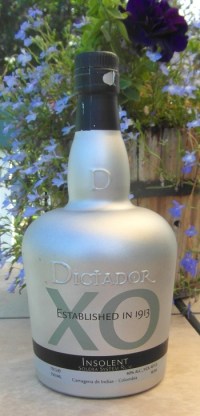
 This past May, I was invited by Thirsty Cellar Imports, to attend a Rum Master Class hosted by Hernan Parra Arango, Rum Master for Dictador Colombian Rum. At the event, the attendees were given the opportunity to taste the entire Dictador line-up which of course included not only the Dictador 12 Year and the Dictador 20 Year Solera Rums, but we also tasted and learned about the Dictador XO Perpetual and XO Insolent Rums.
At the Rum Master Class, I learned that for the Dictador XO Insolent in particular, the aging barrels used are pre-used oak barrels which have a significant percentage of oak obtained from Jerez Spain, as well as pre-used Port Wine Barrels. Near the end of the aging process, the barrels earmarked for the XO Insolent Rum are emptied (and the rum stored of course), and these barrels are subjected to an open flame process which caramelizes the rum soaked oak fibres on the interior of the barrel. These barrels are then refilled with the same rum allowing the spirit to draw the sweet caramelized flavours from the interior of the oak barrel. The final rum is blended and barreled at 40 % Alcohol by volume.
You may read my full review for the XO Insolent Rum by clicking on the following excerpt:
Review: Dictador XO Insolent Rum
Please enjoy my latest review!
 In my part of Canada, Lamb’s is one of the most popular rum brands. The brand is owned by Corby Brand, and they the rum’s history all the way to 1849 when Alfred Lamb opened his wine and spirits business in London, England. Apparently Alfred stored his rum barrels (which had been imported from the Caribbean) in his underground cellars which were directly beneath the Thames River. The cool underground air which did not experience large seasonal fluctuations in temperature nor large fluctuations from day to night is reckoned to be one of the secrets behind the unexpectedly smooth taste of his rum.
 Angostura Distillers Limited have been producing rum on the Island of Trinidad since the 1930s. Although the company was originally more famous for its production of Angostura Bitters, it has over time also become one of the major producers of rum in the Caribbean. Their rum is produced on a large 5 column still which is located near Port of Spain, on East Main Road, and (as noted on the
 Havana Club is a Cuban Rum produced by Havana Club International (a joint venture between the Cuban Government and Pernod Ricard) currently produced in two Cuban locations, San José de Las Lajas and Santa Cruz del Norte, Cuba. According to tradition the production of the rum which was to become Havana Club began in 1878 when Spanish immigrant José Arechabala established Destileria La Vizcaya in the port city of Cárdenas, Cuba. The distillery remained in the hands of the Arechabala family and in 1934 José’s grandson (also named José Arechabala) apparently created the recipe for Havana Club Rum and began to market it throughout the world. However, the family lost control of the distillery and the brand when after the Cuban Revolution of 1959, the Cuban Government nationalized the distillery and company.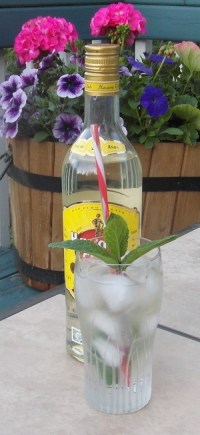

 The Rum Howler Blog