The Rum Howler Blog

(A Website for Spirited Reviews)

  • Copyright

    Copyright is inherent when an original work is created. This means that the producer of original work is automatically granted copyright protection. This copyright protection not only exists in North America, but extends to other countries as well. Thus, all of the work produced on this blog is protected by copyright, including all of the pictures and all of the articles. These original works may not be copied or reused in any way whatsoever without the permission of the author, Chip Dykstra.
  • Cocktails and Recipes

    Click Image for Awesome Recipes

  • Industry Interviews

    Interviews

    Click the Image for Great Interviews with the Movers of Industry

  • The Rum Howler Interview (Good Food Revolution)

    Click on the Image to see my interview on Good Food Revolution

  • The Rum Howler Blog

    Unknown's avatar

  • Rum Reviews

  • Whisky Reviews

  • Gin Reviews

  • Tequila Reviews

  • Vodka Reviews

  • Enter your email address to subscribe to this blog and receive notifications of new posts by email.

    Join 1,092 other subscribers
  • Subscribe

  • Visitors

    • 15,538,627 pageviews since inception
  • Archives

  • Follow The Rum Howler Blog on WordPress.com

Review: Pierre Ferrand 1840 Original Formula Cognac

Posted by Arctic Wolf on April 26, 2018

Pierre Ferrand 1840 Original Formula

Cognac Ferrand is the result of a rare opportunity offered to a young man (Alexandre Gabriel) in 1989 by one of the oldest wine growing families in the Cognac region of France. According to Mr. Gabriel,

I met a small Cognac producer who needed help selling his products to finish off his stock. This was Cognac Ferrand. I fell in love with the product and with the region. It all reminded me of what I grew up around. So when I was invited to become a partner and told that no one was going to continue if I didn’t, I just said….yes.”

Although that beginning may have seemed rather precarious to those on the outside, Alexandre made the most of his opportunity, and now Cognac Ferrand a well-respected producer with sales in more than 40 countries world-wide.

For Pierre Ferrand 1840 Original Formula Cognac, Alexandre collected old bottles of cognac that were bottled at a young age and designed his Cognac based upon a particular bottle from 1840 replicating a style of cognac which had heretofore been lost.

The Heretic

In 1840, the appeal for Cognac was much more broadly based. Rather than being an after dinner indulgence consumed in a brandy snifter, those who consumed Cognac regularly mixed it with Seltzer water, and it was even the distilled spirit of choice for cocktails. Mr. Gabriel is convinced that bringing people back to the origins of cocktail culture through an original style cognac is a winning idea.

You may click on the following excerpt to read the full review:

Review: Pierre Ferrand 1840 Original Formula Cognac

“… Even before I put my nose to the glass, I could sense the clean scent of fresh green grapes climbing into the air above the glass. When I did place my nose over the glass to inspect the breezes, I received enticing aromas of oak spices which gave me and impressions of freshly sanded oak  and sandalwood. Hints of cinnamon stained the oak spices …”

Of course I could not help but follow Alexandre Gabriel’s lead and constructed a somewhat heretical cocktail using not only his wonderful cognac, but also a 20-year-old brandy at the conclusion of my review.

Please enjoy the review, and my fantastic cocktail suggestion, the Heretic!

Posted in Brandy and Cognac Reviews, Cognac Review | Tagged: , , , , | Comments Off on Review: Pierre Ferrand 1840 Original Formula Cognac

Review: Hundred Volt Canadian Whisky

Posted by Arctic Wolf on April 25, 2018

The Highwood Distillery is the only large locally (Albertan) owned distillery in Canada. It sits in the heart of the High River community, producing more than 300,000 cases of bottled spirits per year. Although the bulk of their production goes towards Vodka, Flavoured Vodka, and Premixes, they also produce a sizable (and growing) amount of Canadian Whisky each year. I consider the whisky produced at their distillery to be a unique product unlike anything else on the Canadian whisky landscape (I also find it very tasty). What is so original about the Highwood Whisky is the batch process they employ (see here).

Highwood’s  Hundred Volt Whisky is produced from prairie grains (corn and rye) in a batch style distillation (the grains are distilled and aged separately). The different styles of whisky are aged 3 to 5 years in charred American white oak barrels (without the addition of additives), and when they are mature, they is blended to produce that distinctive Canadian ‘rye’ flavour profile consistent with Canadian Whisky. The Hundred Volt Whisky is bottled at 50 % alcohol by volume, (One Hundred Proof).

Here is a link to my full review:

Review: Hundred Volt Canadian Whisky

“… The nose is just a touch astringent as the high alcohol proof shows itself in the breezes. A nice combination of soft butterscotch, vanilla and almond scents reveal themselves along with some fine oak spices which gives the whisky a dusty dry appealing quality. Light accents of orange peel, ginger and cigarette tobacco can be found within the oak spice …”

Please enjoy my review of this new Canadian Whisky from Highwood Distillers.

Chimo

Posted in Canadian Whisky, Whisk(e)y, Whisk(e)y Review | Tagged: , , , , | 2 Comments »

The Rum Howler Introduces Mezcal

Posted by Arctic Wolf on April 24, 2018

Some of you may have noticed recent changes to the labels on your favourite bottles of Mezcal.. These changes are a result of the new Mexican regulations which are part of the new labeling standards for the spirit (NOM 070-SCIFI-2016) which were put into effect last year (April 2017). These regulations are an effort of the Mexican Government to regulate and categorize Mezcal in a similar manner to the way that Tequila is regulated. They are meant to bring consistency to the production of Mezcal, but more importantly to establish a region of origin such that the spirit remains a true Mexican Spirit.

From the appearance of the liquor store retail shelves in Edmonton, this attempt by the Mexican Government (and Mezcal producers) has been very successful to date, as the number of Mezcal Spirits available in my retail market has jumped significantly. As a result, I have decided that it is time to introduce the spirit to my website.

Thus far I have secured a few sample bottles, and am working hard to secure more such that I can begin a review series in early June.

Mezcal is a much more varied product than is Tequila as the number of varieties of Maguey (agave) which may be used is much higher. As well the new classification system for Mezcal is somewhat more complicated (some might say more thorough). As my first posting with respect to the newly regulated Mexican spirit, I thought I might attempt to unravel some of the mystery regarding is labeling and classification.

This is my attempt to explain some of the changes and the new classifications for Mezcal.

100% Maguey

Going forward, all commercial bottles of Mexcal must be labeled with the phrase ‘100% Maguey‘ or ‘100% Agave‘. Maguey and Agave may be considered synonymous, and the intent of this criteria is to inform the consumer that Mescal is a 100% agave product. There is no ‘Mixto’ classification.

Denomination of Origin Protected

Going forward, Mescal brand owners are required to place upon the front label of their Mescal spirit either a “Made in Mexico” statement or use the “Eagle’s Head” to indicate to the consumer that the spirit was produced in Mexico. This exact phrase must be listed on the front label, in a font that is not to be any smaller than 3 mm in height. This phrase is to identify that what is in the bottle was made within the demarcated region for mezcal and according to all laws and regulations dictating its production.

Categories of Mezcal

In addition, according to the new regulations, Commercial Mezcal must now be categorized based upon how the maguey is cooked, fermented, crushed, and distilled. Each bottle must display on the front label, which of the three catagories, Mezcal, Artesanal, or Ancestral, the spirit belongs to. The specifications for each category are as follows:

Mezcal

Cooking: Cooking of agave piñas or juice in underground pits, above ground masonry ovens or autoclaves.

Milling: Tahona, Chilean or Egyptian mill, cane press, chipper, or roller mills.

Fermentation: Fermentation can take place in wood, concrete, or stainless steel vats

Distillation: Alembic still, continuous or column still made from copper or stainless steel.

Mezcal Artesanal

Cooking: Agave piñas must be cooked in underground pits or above ground masonry ovens.

Milling: Wooden mallet, tahona, Chilean/Egyptian mill, cane press, or chipper.

Fermentation: Fermentation can be performed in rock pits, in-ground pits, tree trunks, clay urns, wooden vats, or animal hide. The fermentation may include agave fibers.

Distillation: Distillation must be fueled by direct fire beneath a boiler of either copper or clay. The head or “hat” of the still may be made of clay, wood, copper, or stainless steel.

Mezcal Ancestral

Cooking: Agave piñas must be roasted in underground, earthen pits.

Milling: Roasted agave can only be crushed using wooden mallets, tahona, or a Chilean/Egyptian mill.

Fermentation: Fermentation can only take place in rock pits, in-ground pits, tree trunks, masonry tanks, clay urns, or wooden vats, or animal hide. Process may include fibers.

Distillation: Stills must be fueled by direct fire with boilers constructed of clay, with the head or “hat” of the still constructed of clay or wood.

Classifications within each Category:

All Mescal must be further classified based upon its maturation. These Classes are as follows:

Blanco or Joven: Mezcal which has not been altered in any way after distillation. (No aging)

Madurado en Vidrio: Mezcal that has been rested in glass vessels larger than 5 liters for over 12 months either buried underground or in a specialized area that minimizes variations in light, temperature, and humidity.

Reposado: Mezcal that has rested in wooden barrels for two months but not longer than 12 months in a specialized area that minimizes variations in light, temperature, and humidity. There are no specifications or limits regarding the shape or size of the barrels.

Añejo: Mezcal that has rested in wooden barrels for over twelve months in barrels that are no larger than 1,000 liters. They must be rested in in a specialized area that minimizes variations in light, temperature, and humidity.

Abocado con/Infused with: Mezcal that has had ingredients or extracts added to the mezcal post-distillation to contribute flavor. These ingredients can include, but are not limited to: Agave worm, damiana, orange, lime, mango, honey, or others, provided they are authorized by Ministry of Health.

Destilado con/Distilled with: Mezcal that is distilled with ingredients to influence flavor. Ingredients used can include, but are not limited to: Turkey or chicken breast, rabbit, mole, and plums, among others.

Posted in Howls | Comments Off on The Rum Howler Introduces Mezcal

Review: Cabrito Blanco Tequila

Posted by Arctic Wolf on April 23, 2018

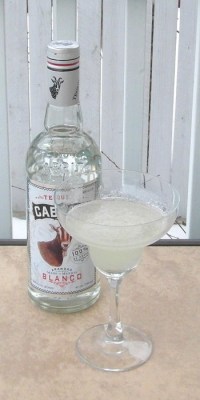
Cabrito is a Tequila Brand owned by the Phillips Distilling Co.. The agave spirit is produced by Tequila Centinela, S.A. de C.V. (Nom 1140). (This is the same distillery which produces Centinela Tequila). The distillery is located in the Arandas, Jalisco which is the main tequila production center in the Los Altos highlands.

Cabrito Blanco is produced from 100 %agave grown in the Los Altos highlands. Tequila produced from agave grown in the highlands typically exhibit strong fruity citrus notes and have a little squeal of hot pepper in the finish. The harvested agave is cooked in a stone oven. The cooked agave is shredded with a roller mil and the extracted juice is double distilled. The blanco spirit is bottled at 40 % alcohol by volume.

Here is a link to my full review:

Review: Cabrito Blanco Tequila

“… The flavour starts out lightly sweet with punky agave which is quickly followed by a squeal of peppery spice. I taste sweet impressions of cotton candy and vanilla; vegetal impressions of impressions of baked squash, plantain, and musty burlap; and peppery impressions of lime zest and black pepper …”

Please enjoy my review which concludes with a very nice variation of the Margarita, a serving I have named, Lexi’s Cocktail.

Chimo!

Posted in Blanco Tequila, Tequila, Tequila Review | Tagged: , , , | Comments Off on Review: Cabrito Blanco Tequila

Review: Park Distillery Glacier Rye

Posted by Arctic Wolf on April 22, 2018

Park Distillery  is located in the town of Banff, Alberta. The facility is not just a distillery, it is also a Restaurant and bar which opened in May of 2015 shortly after the Provincial government introduced new regulations which allowed for Craft distilleries to operate. Located high in the Mountains of Banff Provincial Park, the Distillery proudly serves regionally produced food in its restaurant, and local (sourced from high-altitude family farms in the Alberta foothills) grains to produce their spirits.

Park Distillery Glacial Rye is produced on the distillery’s 600L Kothe Pot – Twin Column Hybrid Still. It is made from 100% Alberta Rye and glacial water which originated at six high glaciers in the Rocky Mountains. This water gains minerality as it travels across rich limestone deposits.

Here is a link to my full review:

Review: Park Distillery Glacier Rye

“… The nose is very interesting with scents of mushy banana and plantain rising alongside zesty citrus notes and fresh spicy rye grain. I also notice hints of baked squash and a very light astringency (which is expected when one examines unaged spirits).  All in all I am quite pleased …”

Please enjoy my review which contains the suggested servings, Back Country Tea, and the Johnson Canyon Smash.

Chimo!

Posted in Moonshine and New-make | Tagged: , , | Comments Off on Review: Park Distillery Glacier Rye