






 It’s been five years since I published my review for Bacardi Anejo Rum, and I noticed the brand has had a facelift recently. It is now branded as Bacardi Anejo Cuatro, and it sports a spiffy new age statement, “Aged 4 Years” according to the new label. When I saw the changes in a local retail store I decided I should reach out for a new sample bottle so I could see if my thoughts on the brands had changes in the past 5 years.
Bacardi Anejo Cuatro Rum is produced using column still distillation and oak barrel aging. The rum carries a four year age statement, and it appears to have replaced the former Bacardi Anejo in the rum producer’s line-up. Apparently, the final rum is further ‘shaped’ by filtering the aged rum through a secret blend of charcoal. This charcoal filtration helps to blunt some of the harsh flavour characteristics of a young rum giving it a smoother taste profile and less astringency.
The final rum is bottled at 40 % alcohol by volume.
Here is a link to my full review:
Review: Bacardi Anejo Cuatro
Enjoy my review which includes two nice cocktail suggestions, the Spence Cocktail and The Railcar.
Chimo!
 In 1862, Facundo Bacardi and his brother José bought the Santiago de Cuba Distillery and began to distill what would become the most popular commercial rum in the world. Using a method of charcoal filtering, and oak barrel aging along with a still of copper and cast iron, Facundo created a smoother more refined version of the locally made rum. His smoother version of the spirit became local favourite, and over time, an international sensation.
 Bombay Sapphire London Dry Gin was launched in 1987 and draws its unusual name from a competition where several marketing agencies were asked to submit possible names and bottle designs for the new Gin. Bombay Sapphire, the chosen name, refers to the British Empire and heritage for the spirit in India, as gin was an extremely popular spirit during the time of the British Raj. The Star of Bombay (featured on the label) is a famous Indian Sapphire now on display at the Smithsonian Institute.
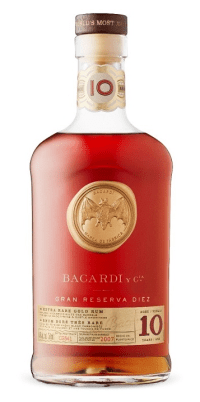 In 1862, Facundo Bacardi and his brother José bought the Santiago de Cuba Distillery and began to distill what would become the most popular commercial rum in the world. Using a method of charcoal filtering, and oak barrel aging along with a still of copper and cast iron, Facundo Bacardi created a smoother more refined version of the locally made rum. His smoother version of the spirit became local favourite, and over time, an international sensation. Of course, Bacardi Rum is not made in Cuba anymore, the
  In 1862, Facundo Bacardi and his brother José bought the Santiago de Cuba Distillery and began to distill what would become the most popular commercial rum in the world. Using a method of charcoal filtering, and oak barrel aging along with a still of copper and cast iron, Facundo Bacardi created a smoother more refined version of the locally made rum. His smoother version of the spirit became local favourite, and over time, an international sensation. Of course, Bacardi Rum is not made in Cuba anymore, the
  The Rum Howler Blog