






 It is commonly believed that May, 5th or Cinco de Mayo is a well celebrated holiday in Mexico roughly equivalent to the US Holiday of Independence on July, 4rth. The truth of the matter is that Cinco de Mayo is not really a major holiday in Mexico and is more widely celebrated in the United states than it ever has been south of their border. It is not even a holiday related to Mexico’s actual Independence Day known as El Grito de la Independencia (“Cry of Independence”). That phrase was first spoken on September 16th, 1810 by Miguel Hidalgo y Costilla, a Roman Catholic priest in the small town of Delores. That moment is said to have marked the beginning of Mexico’s War of Independence against Spain.
Cinco de May commemorates an entirely different event, the 1862 Battle of Puebla, in which the Mexican Army met and drove back an invasion force of the French. This battle ended in a victory for the Mexican Army over a much stronger and better equipped occupying French force. Although the French continued their push towards Mexico City, the Battle of Puebla provided the Mexican people a much need morale boost which eventually led to their ultimate victory over the French. (History it seems is full of remarkable parallels.)
Thus in recognition of the Battle of Puebla for which Cinco de Mayo is celebrated, we may raise a glass of Tequila today. The glass I am going to raise is one of PaQuí Tequila (Silvera).
Here is an excerpt from my review:
Review: PaQuí Silvera Tequila
Of course I am going to enjoy a few cocktails today, most probably a Metro Mexico Cocktail, and perhaps as the sun gets warmer, a Royal Alexander Margarita.
 I have been given a few Orange liqueurs to review from a few different sources over the past few months,
 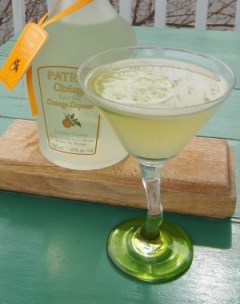 Patrón Citrónge is a relatively new orange liqueur from
  In 1856, John Gibson purchased 40 acres and built a distillery along the shore of the Monongahela River in Pennsylvania. By the turn of the century, the Gibson’s Distilling Company was the largest producer of rye whisky in North America. Unfortunately, early in the new century, fate dealt the company a tragic blow, in the name of Prohibition. Consumption of legal whisky all but dried up, and Gibson’s Distilling Company went bankrupt. In 1923, the entire contents of the distillery including the stills, the aging barrels, all of the remaining spirit, (and even the grain which was on site) was sold via Sherriff’s auction to Schenley Industries of New York. Fifty years later this whisky brand, which was born on the US side of the border in Pennsylvania, was resurrected by the brand owner at the Schenley Distillery in Valleyfield, Quebec. Now, of course, it has become one of the iconic brands of Canadian Whisky.
 Caorunn Gin
 The Rum Howler Blog