






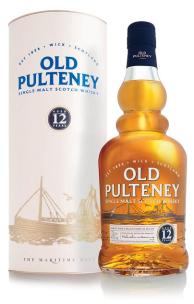
 According to the Old Pulteney website, this whisky is produced at the northernmost distillery on the Scottish mainland, in Wick. (It was founded in 1826 by James Henderson during the time of Wick’s herring boom.) The distillery lies in the heart of ‘Pulteneytown’, which was created for the fishermen in the area, and the distillery is an integral part of the history of this coastal town. Last year Old Pulteney shocked more than a few people when their 21-year-old expression won the big award in Jim Murray’s Whisky Bible as the world’s best whisky in 2012. This year they are making more waves with the recent release of the distillery’s oldest production release, a 40-year-old single malt whisky. (The Old Pulteney 40 Year Old is extremely limited; but it has apparently been seen in a few stores here in Alberta.)
My 375 ml sample bottle of the Old Pulteney 12 Year Old Single Malt was provided by Woodman Wines and Spirits Inc. who are the importers/distributors of this brand in the Province of Ontario. I am told that this whisky will once again be available again in Ontario as the LCBO is about to launch it’s “spring” Whisky Shop selections across the Province.
You may click on the excerpt to read my full review:
Review: Old Pulteney 12 Year Old
Cheers Everybody, and enjoy the review!
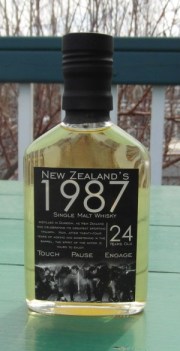 My reviews of the New Zealand Whisky Collection continue with the New Zealand’s 1987 Single Malt Whisky (40 % ABV). The now closed distillery at Dunedin on the South Island of New Zealand once produced both Single Malt and blended whisky. After the distillery’s closure, about 600 barrels of single malt and blended grain whisky remained and were left to mature. Two years ago (in 2011), Mr Greg Ramsey, an Australian whisky enthusiast from Tasmania, bought those barrels and set about bottling the whisky as part of a plan to revive the New Zealand whisky industry. As part of that plan, he created the New Zealand Whisky Collection.
 In 1856, John Gibson purchased 40 acres and built a distillery along the shore of the Monongahela River in Pennsylvania. By the turn of the century, the Gibson’s Distilling Company was the largest producer of rye whisky in North America. Unfortunately, early in the new century, fate dealt the company a tragic blow, in the name of Prohibition. Consumption of legal whisky all but dried up, and Gibson’s Distilling Company went bankrupt. In 1923, the entire contents of the distillery including the stills, the aging barrels, all of the remaining spirit, (and even the grain which was on site) was sold via Sherriff’s auction to Schenley Industries of New York. Fifty years later this whisky brand, which was born on the US side of the border in Pennsylvania, was resurrected by the brand owner at the Schenley Distillery in Valleyfield, Quebec. Now, of course, it has become one of the iconic brands of Canadian Whisky.
 Seagram’s has a rich and storied history which can be dated back to 1857 when the Granite Mills and Waterloo Distillery Company was formed. About seven years later, Joseph Seagram joined the company and by 1911 the company was known as Joseph E. Seagram & Sons. Today, over 100 years later, the Seagram name is still in use as a brand, but ownership of this whisky has been passed on to Diageo who now use the aged stocks at their Valleyfield Distillery in Quebec to produce the whisky.
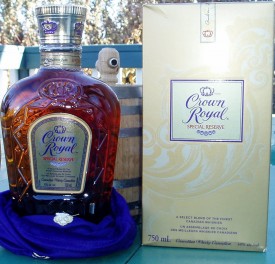 Crown Royal Canadian Whisky is currently produced in Gimli, Manitoba, at the Crown Royal Distillery. The distillery and the brand are owned by Diageo, and I think it is fair to say that Crown Royal is Diageo’s flagship Canadian whisky brand. In 1992, a premium version of Crown Royal was introduced as Crown Royal Special Reserve. This whisky was produced from specially selected casks which were tasted and monitored closely by the Crown Royal Master Blender. These ‘premium casks’ represented whiskies with special character, and they were allowed to age longer with the aim of producing a more premium whisky.
 The Rum Howler Blog