







 Bombay Sapphire London Dry Gin was launched in 1987 and draws its unusual name from a competition where several marketing agencies were asked to submit possible names and bottle designs for the new Gin. Bombay Sapphire, the chosen name, refers to the British Empire and heritage for the spirit in India, as gin was an extremely popular spirit during the time of the British Raj. The Star of Bombay (featured on the label) is a famous Indian Sapphire now on display at the Smithsonian Institute.
Bombay Sapphire is a London Dry Gin. This style of gin is produced through a double distillation of a neutral grain spirit with botanicals added during the second distillation. The botanicals include, Spanish almonds and lemon peel, West African grains of paradise, Chinese licorice, juniper berries from Tuscany, orris root from Italy, angelica root from Saxony, coriander seed from Morocco, cassia bark from Indo China, and cubeb berries from Java.
Bacardi (the brand owner) recently extended the Bombay Sapphire family of gins with a new limited-edition version, Bombay Sapphire Limited Edition Estate Gin which according to the press releases was inspired by the English countryside summer season, and contains three new botanicals, Pennyroyal Mint, Rosehip and toasted Hazelnut.
Here is a link to my review of Bacardi’s new Limited Edition Gin:
Review: Bombay Sapphire Limited Edition Estate Gin
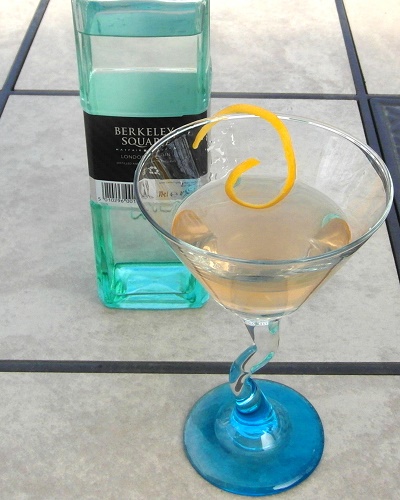
Please enjoy my review which concludes with my serving suggestion, a Wet Martini.
Chimo!


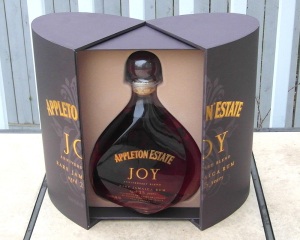
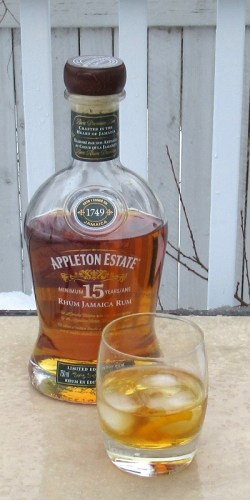 The Appleton Estate is located in Nassau Valley in St. Elizabeth which is part of Jamaica’s Cockpit Country. The Cockpit Country is a karst formation which was formed over millions of years as the underlying limestone was eroded by the chemical action of rain. Within a cockpit karst formation are valleys known as Poljes. They are formed where a river floods, then recedes and forms a flat valley over millions of years. The soil in the poljes is very fertile and rich in nutrients because of the sediments left behind after the river had receded. In 1749, within the polje known as the Nassau Valley, the Appleton Estate Sugar Factory was founded. The Nassau Valley has a special mild micro-climate which is ideally suited to the growth of sugarcane. As well, a water source wells from the limestone formation and provides an exceptionally soft pure water which used for the production of Appleton Estate Rums.
 The Rum Howler Blog