






 Crown Royal® Canadian Whisky was originally introduced in 1939 (by Samuel Bronfman of Seagrams) as a special whisky bottling to commemorate the Royal tour of Canada by King George VI and Queen Elizabeth in that year. Until 1964, the whisky was only available in Canada; however, today it is available world-wide and is in fact the number one Canadian whisky brand sold in the USA. Crown Royal is currently produced in Gimli Manitoba, at the Crown Royal Distillery which (since the dissolution of the Seagrams portfolio in 2000) is owned by the spirits conglomerate Diageo.
Cask No. 16 is according to the company website,
“handcrafted from more than 50 different aged Canadian whiskies and then finished in Cognac Oak casks from the Limousin forest in France”
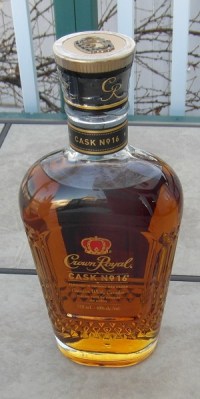 Although rumours persist as to the demise of this outstanding blend, I note that as of the end of 2014, it remains listed on the Crown Royal website as part of the Crown Royal Family, and remains readily available in my home Province of Alberta.
And, I am quite happy that the Cask No. 16 is readily available, as I have placed it in the number 3 spot, in my Top 25 Canadian Whisky Countdown of 2014.
Here is my recently updated review:
#3 Canadian Whisky – Crown Royal Cask No. 16
For those who prefer a more subdued corn profile and a milder rye like burn, this is probably the perfect Canadian whisky. It is wonderfully luxurious and rich, yet full of character and complexity. Sip it neat, or on the rocks, and you will not be disappointed.
___________________________________________________________________________________________________________________________________________________________
Note: You may follow my Countdown list of the 25 Best Canadian Whiskies here: The Rum Howler – Top 25 Canadian Whiskies of 2014
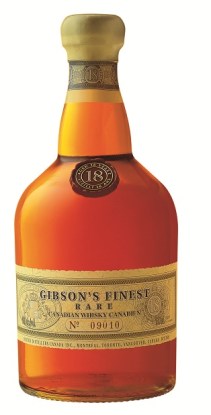 According to my correspondence with the media company responsible for, Gibson’s Finest Whisky, the Gibson’s Finest brand is produced from of two sources: a base grain whisky (which would be a corn-based column still whisky), and a blend of rye based flavouring whisky which contains rye and malted barley (distilled by a single column still and a pot still). When aging their whisky, Gibson’s Finest uses a variety of barrels: ex-bourbon barrels, new oak barrels, etc. The ratio of each barrel-type used can differ from batch to batch because the whisky is blended to a specific taste profile rather than to a specific barrel regimen. Gibson’s Finest Rare 18 Years Old Whisky is limited to a production of not more than 12,000 bottles per year.
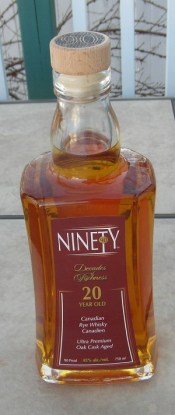 Highwood chose the brand name ‘Ninety’ because these new whiskies are bottled at 90 proof (or 45 % alcohol by volume) rather than the usual 80 proof (40 % alcohol by volume). The higher bottling strength means that the final whisky will retain a character closer to the original cask strength whiskies from which they were blended. In the case of the Ninety “Decades of Richness” 20 Year Old Canadian Rye Whisky, the bulk of blend almost certainly has been drawn from Highwood’s treasured reserves of remaining Potters whisky stocks which are rumoured to contain barrels of whisky as old as 33 years.
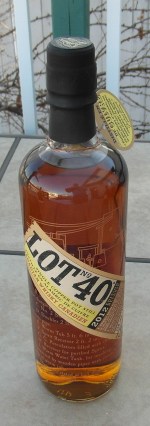 Lot No. 40 Single Copper Pot Still Canadian Whisky is made with locally grown rye which has been distilled upon a single 12,000-litre copper pot still. The final whisky is aged in new oak barrels to showcase the creamy caramelized flavours which new freshly charred oak barrels bring.
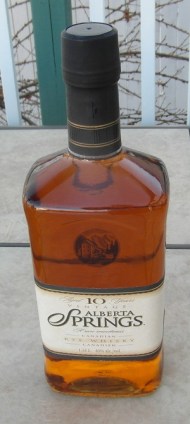 But, Rick steadfastly maintained that the whisky is currently (and has always been) a predominantly rye based whisky with a consistent taste profile. He also explained how his computerized dials and gauges in the distillery, and his quality assurance tasting panel, ensure that the flavour does not change as the mash bill may change slightly over time. Rick Murphy also made it very clear to me during the tour I was given in 2012, that of all the whiskies he makes at ADL, Alberta Springs was his favourite.
 The Rum Howler Blog