






 Some of you may have noticed recent changes to the labels on your favourite bottles of Mezcal.. These changes are a result of the new Mexican regulations which are part of the new labeling standards for the spirit (NOM 070-SCIFI-2016) which were put into effect last year (April 2017). These regulations are an effort of the Mexican Government to regulate and categorize Mezcal in a similar manner to the way that Tequila is regulated. They are meant to bring consistency to the production of Mezcal, but more importantly to establish a region of origin such that the spirit remains a true Mexican Spirit.
From the appearance of the liquor store retail shelves in Edmonton, this attempt by the Mexican Government (and Mezcal producers) has been very successful to date, as the number of Mezcal Spirits available in my retail market has jumped significantly. As a result, I have decided that it is time to introduce the spirit to my website.
Thus far I have secured a few sample bottles, and am working hard to secure more such that I can begin a review series in early June.
Mezcal is a much more varied product than is Tequila as the number of varieties of Maguey (agave) which may be used is much higher. As well the new classification system for Mezcal is somewhat more complicated (some might say more thorough). As my first posting with respect to the newly regulated Mexican spirit, I thought I might attempt to unravel some of the mystery regarding is labeling and classification.
This is my attempt to explain some of the changes and the new classifications for Mezcal.
100% Maguey
Going forward, all commercial bottles of Mexcal must be labeled with the phrase ‘100% Maguey‘ or ‘100% Agave‘. Maguey and Agave may be considered synonymous, and the intent of this criteria is to inform the consumer that Mescal is a 100% agave product. There is no ‘Mixto’ classification.
Denomination of Origin Protected
Going forward, Mescal brand owners are required to place upon the front label of their Mescal spirit either a “Made in Mexico” statement or use the “Eagle’s Head” to indicate to the consumer that the spirit was produced in Mexico. This exact phrase must be listed on the front label, in a font that is not to be any smaller than 3 mm in height. This phrase is to identify that what is in the bottle was made within the demarcated region for mezcal and according to all laws and regulations dictating its production.
Categories of Mezcal
In addition, according to the new regulations, Commercial Mezcal must now be categorized based upon how the maguey is cooked, fermented, crushed, and distilled. Each bottle must display on the front label, which of the three catagories, Mezcal, Artesanal, or Ancestral, the spirit belongs to. The specifications for each category are as follows:
Mezcal
Cooking: Cooking of agave piñas or juice in underground pits, above ground masonry ovens or autoclaves.
Milling: Tahona, Chilean or Egyptian mill, cane press, chipper, or roller mills.
Fermentation: Fermentation can take place in wood, concrete, or stainless steel vats
Distillation: Alembic still, continuous or column still made from copper or stainless steel.
Mezcal Artesanal
Cooking: Agave piñas must be cooked in underground pits or above ground masonry ovens.
Milling: Wooden mallet, tahona, Chilean/Egyptian mill, cane press, or chipper.
Fermentation: Fermentation can be performed in rock pits, in-ground pits, tree trunks, clay urns, wooden vats, or animal hide. The fermentation may include agave fibers.
Distillation: Distillation must be fueled by direct fire beneath a boiler of either copper or clay. The head or “hat” of the still may be made of clay, wood, copper, or stainless steel.
Mezcal Ancestral
Cooking: Agave piñas must be roasted in underground, earthen pits.
Milling: Roasted agave can only be crushed using wooden mallets, tahona, or a Chilean/Egyptian mill.
Fermentation: Fermentation can only take place in rock pits, in-ground pits, tree trunks, masonry tanks, clay urns, or wooden vats, or animal hide. Process may include fibers.
Distillation: Stills must be fueled by direct fire with boilers constructed of clay, with the head or “hat” of the still constructed of clay or wood.
Classifications within each Category:
All Mescal must be further classified based upon its maturation. These Classes are as follows:
Blanco or Joven: Mezcal which has not been altered in any way after distillation. (No aging)
Madurado en Vidrio: Mezcal that has been rested in glass vessels larger than 5 liters for over 12 months either buried underground or in a specialized area that minimizes variations in light, temperature, and humidity.
Reposado: Mezcal that has rested in wooden barrels for two months but not longer than 12 months in a specialized area that minimizes variations in light, temperature, and humidity. There are no specifications or limits regarding the shape or size of the barrels.
Añejo: Mezcal that has rested in wooden barrels for over twelve months in barrels that are no larger than 1,000 liters. They must be rested in in a specialized area that minimizes variations in light, temperature, and humidity.
Abocado con/Infused with: Mezcal that has had ingredients or extracts added to the mezcal post-distillation to contribute flavor. These ingredients can include, but are not limited to: Agave worm, damiana, orange, lime, mango, honey, or others, provided they are authorized by Ministry of Health.
Destilado con/Distilled with: Mezcal that is distilled with ingredients to influence flavor. Ingredients used can include, but are not limited to: Turkey or chicken breast, rabbit, mole, and plums, among others.
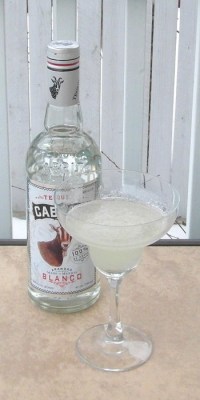 Cabrito is a Tequila Brand owned by the
 Ron Abuelo Anejo rum is produced by
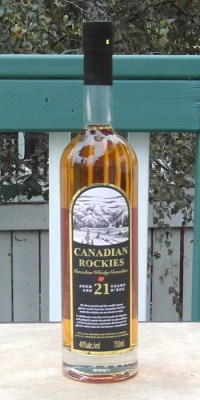 Canadian Rockies 21 Year Old Whisky is produced for The Fountana Group Canada by Highwood Distillers right here in my home Province of Alberta. The Fountana Group contracted Highwood to produce a well aged whisky for export to Asia where it apparently has been well received. The spirit is now a standard bottling (still owned by the Fountana Group) made also for the Canadian Market.
 The Rum Howler Blog