






 In the late 1950s, the main companies involved in the production and distribution of alcoholic spirits in Venezuela were grouped into one organization called Licorerias Unitas S.A by the initiative of Seagrams who owned 51 % of the new entity until 1992. After a series of mergers and acquisitions involving Seagrams, Diageo, and Pernod Richard, a decision was made to divest in facilities and concentrate on brand commercialization.
 The result was a group of local investors who purchased the manufacturing assets of Licorerias Unitas S.A and formed Distilleries Unitas S.A. (DUSA) on August 22, 2002. Although the company is relatively new, the tradition of making quality rum in Venezuela using the these facilities which is not. In fact sugar cane has been cultivated in Venezuela perhaps as early as the 16th century. Systematic rum production in Venezuela can be dated to 1896.
Diplomatico Anejo Rum is a blend of rum spirits which have been aged in a variety of oak casks (predominantly ex-bourbon and ex-malt whisky casks) for up to 4 years.
Here is a link to the number 19 spirit in my Rum Howler 2016 Top 50 Mixing Rums Countdown:
#19 – Diplomatico Anejo Rum
________________________________________________________________________________
Stay tuned for more mixing rum revelations as I will be adding to this list each day until Christmas Eve.
And you can follow the rankings by bookmarking this page:
 In 1856, John Gibson purchased 40 acres and built a distillery along the shore of the Monongahela River in Pennsylvania. By the turn of the century, the Gibson’s Distilling Company was the largest producer of rye whisky in North America. Unfortunately, early in the new century, fate dealt the company a tragic blow, in the name of Prohibition. Consumption of legal whisky all but dried up, and Gibson’s Distilling Company went bankrupt. In 1923, the entire contents of the distillery including the stills, the aging barrels, all of the remaining spirit, (and even the grain which was on site) was sold via Sherriff’s auction to Schenley Industries of New York.
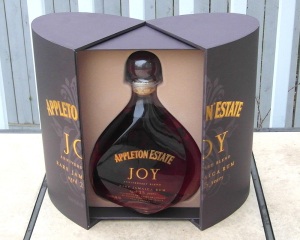
 In 1916, J. Wray and Nephew was purchased by the Lindo Brothers & Co. who also acquired the prestigious sugar cane estate, the Appleton Estate. Lindo Brothers merged the two Jamaican entities into one company, J. Wray and Nephew Ltd. In 2012, J. Wray and Nephew Ltd. was purchased by the Campari group.
 The Rum Howler Blog