






 Cognac Ferrand has long had a special relationship with a variety of Caribbean rum producers which is based upon the rum producer’s need for quality oak casks to age their rum. Based upon this relationship, Cognac Ferrand is able to acquire certain old and unique batches of rum from various Caribbean sources, which they bring back to France and finish in their own warehouses and of course their own Cognac Casks.
Plantation Jamaica (2002) Vintage Edition was first aged in bourbon casks in tropical Jamaica after which it was transported to the Chateau de Bonbonnet in France, where it was aged for 3 more years in used 350 litre Pierre Ferrand Cognac casks to enhance the rum before it was bottled as part of Cognac Ferrand’s growing line-up of Vintage Plantation Rums.
Here is a link to the review for the Rum Howler #15 Rum of 2017:
Review: Plantation Jamaica (2002) Vintage Edition
______________________________________
 We have reached the top 20 rum spirits of 2017. I have reviewed and/or re-tasted each of these rums within the past three years. (All Rum reviews were based upon bottle samples either purchased by myself or provided to me by industry.)
You can continue to follow the countdown on twitter (Rum Howler on Twitter) using the hashtag #Top100Rums.
Alternatively you can view the list as it grows daily by viewing my Reveal Page:
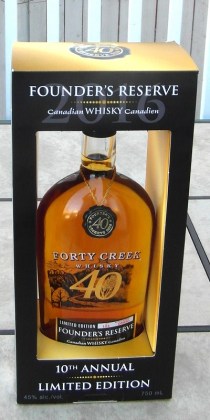 Forty Creek Whisky
 Note: To follow the countdown list of the Top 100 Canadian Whiskies of 2017, you should follow me on twitter (
 Ron Zacapa rums are made from sugar cane harvested in southern Guatemala, which is pressed into virgin sugar cane honey. They are aged using a process they call ‘Sistema Solera’ which is based on the system used to age Spanish sherry. The subject of my review, Ron Zacapa Centenario (23 Solera) is blended from solera aged stocks which range in age from 6 years to 23 years. The aging barrels used are a mixture of American Whisky casks, and Sherry and Pedro Ximenez wine barrels. The combination of solera aging and the variety of reused barrels creates a complex rum with a rich aroma and flavour.
 John Philip (J.P.) Wiser, purchased a distillery in Prescott Ontario in 1857, and began to produce
  In the late 1950s, the main companies involved in the production and distribution of alcoholic spirits in Venezuela were grouped into one organization called Licorerias Unitas S.A. by the initiative of Seagrams who owned 51 % of the new entity until 1992. After a series of mergers and acquisitions involving Seagrams, Diageo, and Pernod Richard, a decision was made to divest in facilities and to instead concentrate on brand commercialization. The result was a group of local investors who purchased the manufacturing assets of Licorerias Unitas S.A. and formed Distilleries Unitas S.A. (DUSA) on August 22, 2002. Although this company is relatively new, the tradition of making quality rum in Venezuela using the these facilities which is not. In fact sugar cane has been cultivated in Venezuela perhaps as early as the 16th century. Systematic rum production in Venezuela can be dated to 1896.
 The Rum Howler Blog