






The Glenmorangie Distillery was officially licensed to produce whisky in 1843 (how long the distillery was unofficial is unknown to me). Glenmorangie, from the beginning, established a tradition of innovation beginning with the construction of tall gin styled stills which would be used to distill their whisky rather than the traditional shorter onion shaped stills in use at the time. They were also amongst the first distilleries to use American oak for maturing their whisky, and in the early 1990’s they were at the forefront of the new style of ‘extra matured’ whiskies which are finished (or perhaps we can say flavoured) by spending time in used wine barrels.
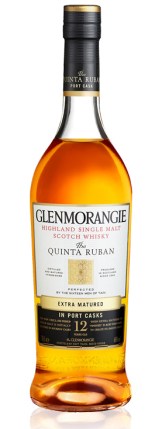 The Glenmorangie Quinta Ruban is a mature whisky (12 years old) that is first aged in ex bourbon casks for at least 10 years, and then finished or ‘extra matured’ in Ruby Port pipes from the Quintas of Portugal. The use of ruby Port pipes gives the Quinta Ruban a sweeter, fruitier flavour and finish.
Here is a link to my review of the #92 Spirit in my Rum Howler 2015 Top 100 Spirits Countdown:
#92 – Glenmorangie Quinta Ruban
________________________________________________________________
You may follow my Countdown list of the 100 Best Spirits here: The Rum Howler 2015 – Top 100 Spirits
 Interestingly, the choice of the distillery to use sugar cane honey rather than molasses is based upon a peculiarity of Colombian government policy. It seems that the country has mandated that automobiles in Colombia must use a certain percentage of biofuels in conjunction with gasoline as their fuel source. As molasses is the most readily available source of biofuel, almost all molasses produced in Columbia is earmarked for biofuel production. This means that the folks at Dictador Rum have little choice but to produce and use their own sugar cane honey for rum production.
 I have had several opportunities to meet George Grant (of that sixth generation of the Grant Family) right here in Edmonton at a tasting events sponsored by
  Although the distilled spirits which make up the Elegance blend must be aged for a minimum of six years, according to Richard Bush, the Area Manager (US Travel Retail, Canada and the Caribbean) for Camus Wines & Spirits, some of the eaux de vie in the Elegance XO blend has been matured for as long as 30 years.
 These whiskies carry no age statement. Instead, the consumer is asked to draw a parallel between the colour of the whisky in the bottle and its age, complexity, and quality. Because these whiskies are naturally coloured by the casks from which they are drawn, the implication is that the richer darker whiskies have aged longer, and/or have had more of their blend drawn from the higher quality Sherry oak casks.
 The Rum Howler Blog