






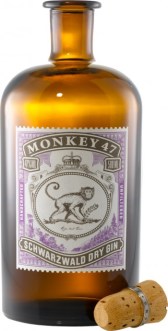
 I came across Monkey 47 Schwarzwald Dry Gin quite by accident. I had just finished publishing my review for Beluga Gold Line Vodka, when I received an email from Fabio Rossi who unbeknownst to me was part of the distribution team for Beluga Vodka in Italy. Fabio is of course the man behind Rum Nation, and we have struck up a bit of a correspondence over the last few years as I have reviewed several of his rums here on my website. It was a bit of a surprise to me that his company also distributed the Beluga Vodka, and of course that prompted me to ask him what other spirits were part of his distribution portfolio. That is when he mentioned Monkey 47 Schwarzwald Dry Gin. He also mentioned that this unusual spirit is apparently taking Europe by storm. I asked Mr. Rossi if he could be persuaded to let me try some, and he was kind enough to send me a 200 ml sample for review upon my website.
You may click on the excerpt to read the full review:
Review: Monkey 47 Schwarzwald Dry Gin
Please enjoy my review of this most unusual dry gin!
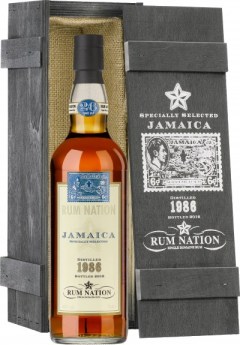 About a month ago, 60 bottles of a special rum from
  Seagram’s has a rich and storied history which can be dated back to 1857 when the Granite Mills and Waterloo Distillery Company was formed. About seven years later, Joseph Seagram joined the company and by 1911 the company was known as Joseph E. Seagram & Sons. Today, over 100 years later, the Seagram name is still in use as a brand, but ownership of this whisky has been passed on to Diageo who now use the aged stocks at their Valleyfield Distillery in Quebec to produce the whisky.
 Caorunn Gin
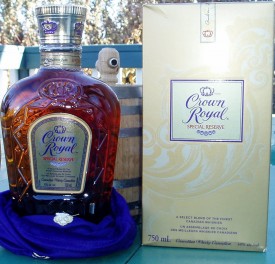 Crown Royal Canadian Whisky is currently produced in Gimli, Manitoba, at the Crown Royal Distillery. The distillery and the brand are owned by Diageo, and I think it is fair to say that Crown Royal is Diageo’s flagship Canadian whisky brand. In 1992, a premium version of Crown Royal was introduced as Crown Royal Special Reserve. This whisky was produced from specially selected casks which were tasted and monitored closely by the Crown Royal Master Blender. These ‘premium casks’ represented whiskies with special character, and they were allowed to age longer with the aim of producing a more premium whisky.
 The Rum Howler Blog