






Wiser’s Red Letter was re-introduced to Canadians in 2007 to pay homage to the 150th anniversary of John Philip Wiser’s distillery in Prescott, Ontario 1857 – 2007), as well as to the original Red Letter Whisky which Wiser’s produced in the late 1800s. In 2009, when I reviewed the inaugural 150th Adversary Edition (see review here), I was told by my contacts within Corby, that the spirit contained various blends of whisky which (although they ranged in age) were all ten years old or more. After these mature whiskies were blended they were then finished in virgin white oak barrels for 150 days. Once the final characteristic of flavour had been achieved, the Red Letter was bottled at 45 % alcohol by volume (non chill filtered).
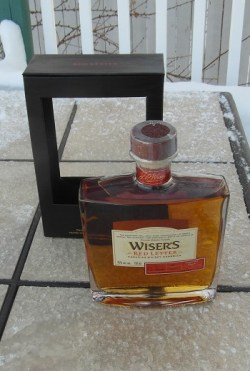 Two years ago, Corby once again in a tribute to their founder J.P Wiser released Wiser’s Red Letter Whisky 2013 Release. As with the 150th Anniversary Edition the whisky was finished in virgin white oak casks and then bottled without chill filtering at 45 % abv..
Here is a link to the review of the second #25 spirit on my Rum Howler Top 100 Spirits Countdown of the best spirits I have ever tasted.
#25b – Wiser’s Red Letter Whisky 2013 Release
________________________________________________________________
You may follow my Countdown list of the 100 Best Spirits here: The Rum Howler 2015 – Top 100 Spirits
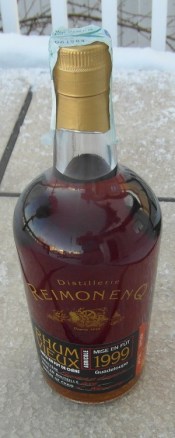 Incidentally, the word “rhum” is the French spelling for our English word “rum”. However, the differences between Rhum and Rum are much deeper than just a twist in spelling. This is because the french traditions of making rhum in the French West Indies differs from the Spanish and English traditions of rum production in the rest of the Caribbean. A major difference in the production of agricole rhum is that it is distilled from fermented sugar cane juice rather than fermented molasses. As well rhum agricole is usually single distilled to 70 per cent alcohol by volume (ABV), and then brought to bottling proof (50 % ABV) after it is aged. These differences in production translate into a very different flavour profile, one that is more floral than molasses based rum.
 I find myself siding with Jim Murray as I find the lighter influence of the American oak barrel allows the whisky to express more fully the subtle nuances of oak and whisky flavours which can be drowned out by the strong sherry influence of a first fill Sherry barrel. Unfortunately for myself, The Macallan Fine Oak series has been discontinued in Canada, although it is my understanding that this series is still available south of the border in the USA.
 Note: Although the whiskey has no age statement, I did a little research and according to Davin’s De Kergommeax’s article in Whisky Advocate
 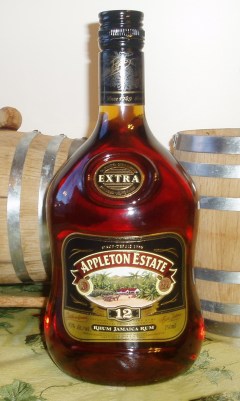 In November 2012 I revisited the Appleton 12 year Old Rum and found that my appreciation of the rum had increased substantially. Another visit to the bottle this year only reinforced that opinion. The Appleton 12 Year Old XO Rum has improved over the years (or perhaps my taste has).
 The Rum Howler Blog