







 I was given a bottle of Myer’s Planter’s Punch a few months ago by a good friend who had purchased it as a curiosity and then subsequently decided the style was not to his liking. (Molasses-rich dark rums are not for everyone so we won’t hold this against him.) This particular dark rum is being distributed in Alberta by Diageo. It has been produced since 1879, and is apparently a blend of continuous and pot still Jamaican rums which have been matured in previously used bourbon barrels for a minimum of four years.
Apparently that is not the whole story, as my bottle clearly states (at the bottom of the label) that the particular bottle which I was given has been blended with Canadian rum as well. For those who do not know, it used to be fairly common for rums imported into Canada to be blended with a small amount (about 1.5 %) of Canadian Rum (usually produced at the Hiram Walker Distillery) in order to obtain a more favourable tax rate from the Canadian Government.
You may read my full review of Myer’s Planters’ Punch by clicking on the following excerpt (link).
Review: Myer’s Planters’ Punch (Canadian Bottling)
_________________________________________________________________________________________________________________________________________________
Note: You may find my 2013 list of the 30 Best Rums here: The Rum Howler 2013 – Top 30 Rums
 The
The  You may read my full review by clicking on the excerpt below:
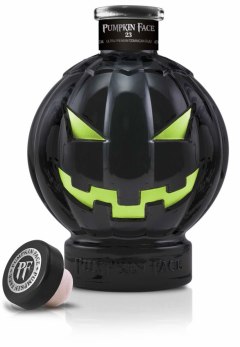 Pumpkin Face Rum
  Lemon Hart is an iconic rum brand with roots which stretch back to the late 18th century when Mr. Lemon Hart began to supply rum to the British Royal Navy. By 1804, production of his “Lemon Hart Rum” was moved from his small merchant office in Cornwall, England to a larger facility in London. Over 150 years later the production of the blend had shifted to the Hiram Walker Distillery in Ontario, Canada. Under the direction of new brand owner, Mosaiq, the Lemon Hart brand has been re-energized, and two new additions to the Lemon Hart family, Lemon Hart Navy Spicy Rum (
 Through the period from the 1580′s to the end of the 18th century Irish soldiers (mercenary or otherwise) were often used as regimental combat troops for the continental European armies. These Irishmen joined the foreign armies for many reasons; some may have merely been adventure seekers; some were obviously looking to strike a blow against their historic enemy England; and some may have seen the military as a means to advance their standing both financially and socially via a military career. What ever the reasons these young men joined the continental forces, it is a sad fact than many hundreds of thousands of these Irishmen died fighting in foreign Armies far from their homeland.
 The Rum Howler Blog