






The Bruichladdich (Pronunciation = Brook Laddie) Distillery was built in 1881 on Hebridean Isle, in what is now known as the Islay region of Scotland. It was one of many distilleries, which despite its long history and tradition of whisky making, was closed in 1994 due to industry consolidation. The distillery no longer produced whisky, but the existing stocks left inside continued to age. The good news is that on 19th December, 2000, the distillery was purchased by a small band of investors. It was renovated and reopened, and on May 21, 2001 the distillery once again began to distill whisky.
This small band of investors then proceeded to turn the Scottish whisky world upside down. They blended and bottled their whisky in small artisan production runs using a multitude of unique finishing casks. Borrowing ideas from their own past experiences, they brought to market a variety of one of a kind whiskies, the like of which the Scottish Whisky World had never seen before.
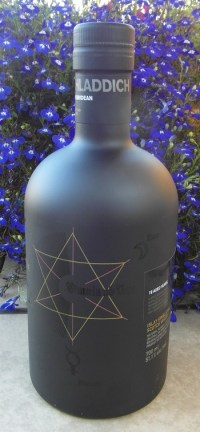 The Bruichladdich 1989 Black Art is just such a bottling. Master Blender, Jim McEwan, used 1989 Vintage whisky stocks and a secret combination of wine finishing casks to create this unusual Vintage Single Malt Whisky. Although I have tried to find out which types of wine casks were used to finish this whisky, my research was to no avail. Apparently, Mr McEwan didn’t allow anybody to see. All we know is what is written on the bottle …
Here is a link to the original review of the #13 Spirit in my Rum Howler 2015 Top 100 Spirits Countdown:
#13 – Bruichladdich 1989 Black Art (1st Edition)
________________________________________________________________
You may follow my Countdown list of the 100 Best Spirits here: The Rum Howler 2015 – Top 100 Spirit
 Alberta Springs is produced by Alberta Distillers Ltd. (owned by Beam-Suntory) in the City of Calgary at the ADL Distillery which is renowned for producing the largest quantity of rye grain whisky in the world. This means that Alberta Springs is very much a rye based whisky. However, Rick Murphy, the Production Superintendent at ADL did tell me that the blend is subject to economic dictates, and therefore the distillery will also use varying amounts of corn in the blended whisky.
 The addition of minute quantities of special ingredients is consistent with what I know of traditional European production methods where each distilled vodka has its own recipe and its own special ingredients. It is these special ingredients used in very small proportions which contribute to the individual character of each Vodka. (By small quantities I really do mean small; typically these extra ingredients are measured in parts per million.)
 In November of 2005,
  Although this variety of barley fell out of favour for production whisky, its strong flavour characteristic caused it to remain in high demand for premium products especially in the home brewing sector and as a key ingredient for traditional ales in micro breweries. Because of this strong flavour characteristic,
  The Rum Howler Blog